When it comes to choosing a home heating system, many UK homeowners find themselves comparing heat pump vs gas boiler options to determine which one offers the best value.
With energy prices fluctuating and the UK accelerating its transition to low-carbon heating, this decision is no longer just about comfort; it’s increasingly about long-term affordability and efficiency.
Quick Stats:
- For decades, gas boilers have been the backbone of home heating in the UK, with around 73% to 78% of households relying on mains gas for central heating.
- Yet the landscape is changing rapidly. Heating the UK’s 28 million homes accounts for roughly 18% of the country’s total greenhouse gas emissions, pushing policymakers and homeowners to explore cleaner alternatives like heat pumps.
- At Renewable Energy Hub, with over a decade of experience helping UK homeowners navigate renewable heating solutions, we’ve seen this debate evolve from a niche sustainability question to a mainstream financial decision.
- While gas boilers are typically cheaper upfront, heat pumps promise higher efficiency and potential long-term savings.
Let’s cut through the noise and compare installation costs, running costs, efficiency, and long-term affordability to help you determine which heating system truly makes sense for your home.
The 60-Second Verdict: Which is cheaper in 2026?
- Cheapest Upfront: A Gas Boiler (£2,200+) remains the lowest initial investment.
- Best Long-Term Value: An Air Source Heat Pump (£2,500+ after grant) offers better value due to a 20+ year lifespan and higher property resale value.
- Lowest Running Costs: A Heat Pump paired with a Smart Tariff beats gas, provided the home is well-insulated.
Direct Cost Comparison of Gas Boilers and Heat Pumps
When comparing the two systems, it is essential to look at both the "sticker price" and the net cost after government support.
Upfront Installation Costs in the UK
|
|
|
|
|
|
|
|
|
|
|
|
|
|
|
|
|
|
|
|
While the gas boiler remains the cheaper initial purchase, the government grant has made heat pumps a competitive option for those with the right property setup.
Running Costs and Energy Bill Impact
The affordability of any heating system depends heavily on the price of fuel. In the UK, electricity is currently more expensive per unit than gas. However, the superior efficiency of a heat pump helps bridge this price gap.
The Efficiency Advantage
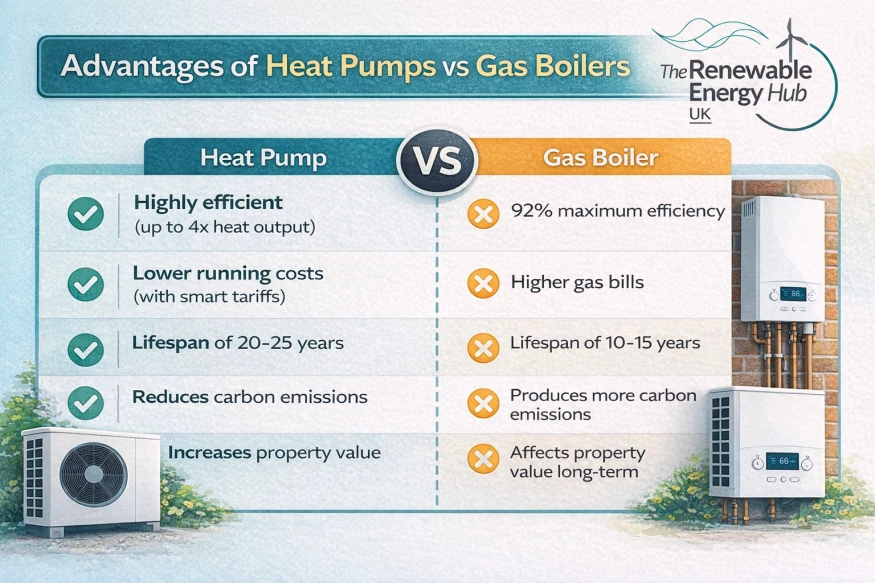
- Gas Boilers: Even the best models lose about 8% of energy through the flue. You pay for 100% of the gas but only get 92% of the heat.
- Heat Pumps: These systems extract free heat from the outdoor air. Because they move heat rather than creating it, they are significantly more efficient.
Maximizing Savings with Smart Tariffs
To make a heat pump truly affordable, homeowners are increasingly switching to Time of Use tariffs. These energy plans allow you to run your heat pump at a much lower rate during off-peak hours. When combined with solar panels or battery storage, the cost to run a heat pump can drop well below the cost of a gas boiler.
Understanding your home's thermal performance is the next step in ensuring your system remains affordable.
Total Cost of Ownership and Long-Term Value
Affordability is not just about the first month of use. It is about how many years the system lasts and how much it costs to maintain.
System Durability and Lifespan
A typical gas boiler has a lifespan of 10 to 15 years. The internal combustion process puts significant stress on components like the heat exchanger. Air source heat pumps operate more like a refrigerator in reverse and generally last 20 to 25 years.
Over 25 years, a homeowner might need to replace their gas boiler twice, whereas a single heat pump could still be operational.
Impact on Property Value and EPC Ratings
For landlords and property investors, a heat pump can significantly improve an Energy Performance Certificate (EPC) rating.
As UK regulations move toward stricter energy standards, homes with renewable heating are often viewed as more future proof, potentially increasing the resale value of the property compared to homes with aging gas infrastructure.
Before deciding, you must evaluate if your property requires additional upgrades to function efficiently.
Hidden Factors That Influence Overall Affordability
Not every home is immediately "heat pump ready." There are specific factors that can add to the initial cost or impact the long-term efficiency of your system.
- Insulation Levels: Heat pumps work best in homes with loft and cavity wall insulation. If your home loses heat quickly, the pump must work harder, which increases electricity consumption.
- Radiator Upgrades: Because heat pumps circulate water at lower temperatures than gas boilers, you may need larger radiators to distribute heat effectively.
- Hot Water Storage: Most heat pumps require a hot water cylinder. If you currently have a combi boiler, you will need to allocate space for this tank.
By addressing these factors during the consultation phase, you can avoid unexpected costs after the installation is complete.
Conclusion
Choosing between gas and renewables in 2026 comes down to your immediate budget versus your long-term savings.
- Stick with a Gas Boiler if you need the lowest upfront cost today. It is a practical, familiar choice for older homes with poor insulation or for homeowners planning to move in the near future.
- Switch to a Heat Pump if you want to future-proof your home. By using the government grant, the initial cost is now comparable to a boiler.
Over time, you will benefit from higher property value, lower carbon taxes, and the ability to use cheap off-peak electricity.
While gas is the traditional route, a heat pump is a strategic investment that protects your bank account from fossil fuel volatility.
Take the Next Step Toward Lower Energy Bills
Choosing between gas and renewable energy is a significant decision that requires expert guidance. At The Renewable Energy Hub, we provide impartial information to help you make a confident choice.
Speak with an independent advisor about your property or receive tailored quotes from vetted, accredited installers in your local area.
Click here to send your Inquiry
Frequently Asked Questions
1. Is a heat pump cheaper to run than gas?
Yes, provided your home is well insulated, and you use a smart energy tariff. Their 300% to 400% efficiency allows them to produce more heat for every pound spent compared to a boiler.
2. How do I get the grant?
The Boiler Upgrade Scheme grant is applied for by your accredited certified installer. The amount is taken directly off your quote, so you only pay the remaining balance.
3. Do I need to upgrade my radiators?
Not always. A professional survey will determine if your current radiators can handle the lower flow temperatures. Often, only a few key rooms require an upgrade to larger units.
4. Will it work during a UK cold snap?
Yes. Modern heat pumps are designed to operate efficiently even at -15°C. They are the primary heating source in much colder climates like Norway and Sweden.
5. How much space do I need?
You will need a small area outside for the fan unit and space inside for a hot water cylinder. If you already have a cylinder, the transition is even simpler.