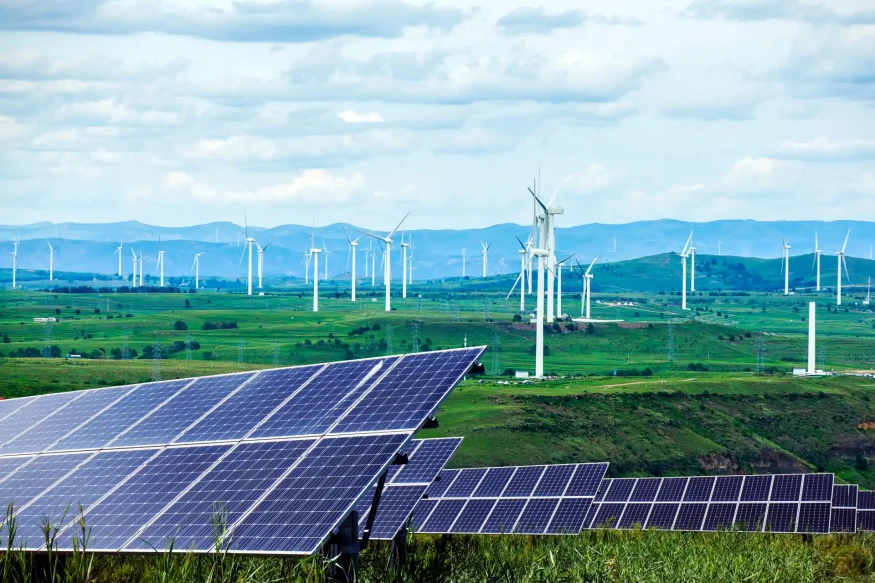
BOOM Power has secured planning permission for its 49.99 MW Drove Lane solar PV plant on land east of Kenley House Farm, near Wawne, in the East Riding of Yorkshire, following council approval in October 2026.
The planning application was approved by East Riding of Yorkshire Council on 16 October 2026, marking an important milestone for the project following a detailed planning process examining the proposed design, landscaping, ecology, flood risk and associated infrastructure for the site.
Lighthouse Property Holdings Ltd managed the planning application on behalf of BOOM Power, which owns and is developing the project.
COMPARE PRICES FROM LOCAL INSTALLERS
Compare prices from local companies fast & free
Enter your postcode to compare quotes from leading professionals. We promise to keep your information Safe & Secure. Privacy Policy
Mark Hogan, Founder of BOOM Power, said:
“Securing planning approval for Drove Lane Solar Farm is an important milestone. The approved scheme reflects the detailed work involved in developing renewable energy projects that respond to the characteristics of their location and the needs of the surrounding environment. At Drove Lane, this has included careful consideration of local ecology, habitat management, landscaping, and flood risk. The planning consent provides a clear framework for taking the project forward while addressing these important considerations. We are pleased to have reached this stage and look forward to progressing the next steps with a focus on securing grid connection timelines through the ongoing grid reform process. This will be an important step in establishing a clear route towards delivery for the project.”
Although BOOM Power has secured planning permission for the Drove Lane Solar Farm it hasn’t yet published the project's grid connection point, investment value, or construction timetable.
Information presented at a public exhibition in Wawne in February 2025 described the solar plant as a temporary development with a 40-year lifespan.
With a generating capacity of 49.99 MW, the project falls below the 100 MW threshold for solar developments to be classified as nationally significant infrastructure projects (NSIPs) in England. This allowed the application to be decided by the local authority rather than going through the Development Consent Order (DCO) process.
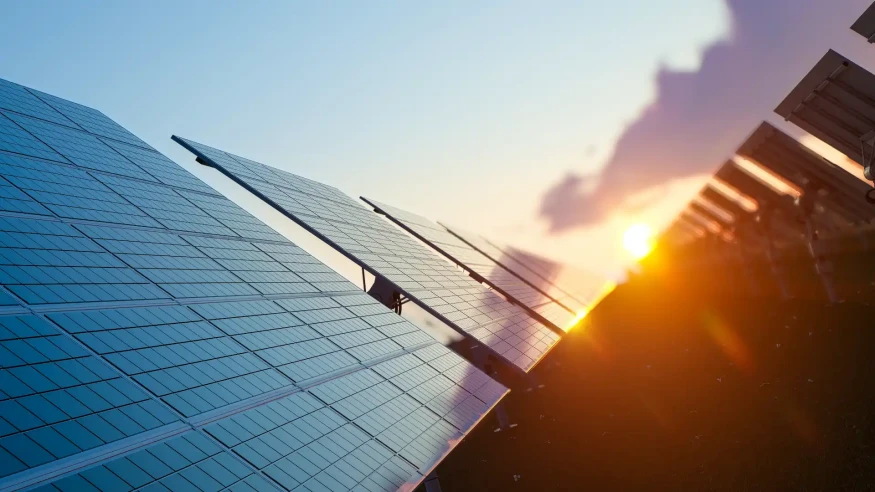
The ground-mounted project will sit on land north of Hull. Alongside the solar PV panels with an installed capacity of 49.99 MW, the approved scheme includes transformer substations, underground cabling, perimeter fencing, CCTV, internal access tracks, and supporting infrastructure.
The solar farm's location on a floodplain has affected the way it was designed. Arrays and sensitive infrastructure will need to be raised in identified flood-risk areas, and open-mesh boundary fencing will allow water to move across the land. Conditions attached to the planning consent cover construction management, drainage, flood risk, landscaping, biodiversity and the eventual decommissioning and restoration of the site.
A dedicated ecological mitigation area is an integral part of the development, backed by habitat management measures aimed at benefiting bird species associated with the Humber Estuary Special Protection Area and Ramsar wetland site.
The developer says that these provisions are intended to minimise disturbance to wildlife and support long-term habitat management alongside the development. The approved landscaping proposals call for the planting and maintenance of hedgerows, shrubs, and trees to help the solar farm blend into its surroundings.
The planning conditions also set out requirements for construction work, lighting and the protection of local wildlife and habitats. The development’s design allows for renewable electricity generation while respecting the surrounding landscape and local environment.
Together, these measures aim to protect the local environment throughout the solar farm’s construction, operation, and eventual restoration.
BOOM Power has taken larger projects through the DCO process, which is used to approve NSIPs, including large solar farms, power stations, and major transport developments. A DCO provides a single consent that can replace the need for several separate planning permissions and other approvals.
BOOM Power’s core team previously worked at Wirsol Energy, which Mark Hogan established in the UK and Australia, and which took the Cleve Hill solar plant, the UK's first solar NSIP, through planning.
BOOM Power secured consent for its first in-house DCO project in May 2025, when the government granted approval for the 400 MW East Yorkshire solar farm. BOOM Power subsequently sold the project to AMPYR Solar Europe in February 2026.
The 1,445-hectare site lies between Gribthorpe, Spaldington, Wressle and Howden, and will use solar panels that track the sun throughout the day to maximise electricity generation. The site will connect to the electricity grid at Drax substation in North Yorkshire.
Like Drove Lane’s mitigation area, this project has also set aside land – in this case, next to the River Foulness – for overwintering birds.
In February 2026, the government granted development consent for BOOM Power’s 237.5 MW Fenwick solar PV plant in Doncaster, which became the first solar NSIP consented in 2026 and the 13th approved under Ed Miliband's tenure as Energy Secretary.
Fenwick will be co-located with a battery energy storage system (BESS), the size of which has not been announced, and will connect to the transmission network via Thorpe Marsh Substation. Its examination by the Planning Inspectorate finished in less than the typical six months.
BOOM Power’s large-scale solar projects in Yorkshire, including Fenwick and East Yorkshire Solar Farm, have faced opposition from local residents and campaign groups. Campaign groups are concerned about the loss of productive agricultural land and the industrialisation of the rural countryside.
Some opponents believe that the height of the solar panels, which will reach up to 3.5 metres at East Yorkshire Solar Farm, could significantly alter the rural character of the area and have a cumulative visual impact on the countryside. Residents worry about the heavy toll of prolonged construction periods, including hundreds of heavy goods vehicle (HGV) movements through narrow single-track village lanes and local roads.
Critics maintain that while they generally support low-carbon energy, large-scale solar developments should be built on industrial rooftops, brownfield sites, or commercial buildings rather than agricultural land.
Some local councils have opposed large-scale solar developments, although nationally significant projects are ultimately decided by the government rather than local planning authorities. This means that projects can receive approval despite objections from local councils and residents.
Planning conditions covering construction management, heavy vehicle routes, landscaping and the eventual decommissioning and restoration of the sites are intended to address some of the concerns raised by local residents.
BOOM Power and project partners argue that these schemes undergo rigorous environmental, ecological, and flood-risk assessments, deliver crucial biodiversity net gains, and play an essential role in reaching national clean energy and decarbonisation targets.
The approval of Drove Lane Solar Farm marks another step forward for BOOM Power's growing portfolio of renewable energy projects in Yorkshire. However, with grid connection arrangements and construction timelines still to be confirmed, the project remains some way from completion. Its progress will also be closely watched by local communities concerned about the impact of large-scale solar developments on the surrounding countryside.
Find a local installer
Welcome to the biggest directory of UK renewable energy companies