The UK and much of Europe experienced record-breaking and back-to-back heatwaves in 2026, with the UK recording 40 days of temperatures exceeding 30°C and five major heatwaves over the summer.
Following the UK’s scorching summer, nearly 172,000 solar installations have been fitted across the UK since the start of 2026 up to late August, according to official Department for Energy Security and Net Zero (DESNZ) data via GOV.UK. Solar panels are designed to convert sunlight into electricity, making them an increasingly popular choice for homeowners and businesses across the UK. However, although a heatwave may seem ideal for solar panels and many people assume that blazing hot, sunny days equal peak solar output, excessive heat can have the opposite effect. While bright sunshine can help increase solar energy generation, solar panels can become less efficient as their temperature rises. This means that the hottest days do not always deliver the highest possible power output.
COMPARE PRICES FROM LOCAL INSTALLERS
Compare prices from local companies fast & free
Enter your postcode to compare quotes from leading professionals. We promise to keep your information Safe & Secure. Privacy Policy
With the UK facing more frequent periods of extreme heat during the summer months, it’s becoming more important to understand how temperature affects solar panel performance. Excessive heat can present several challenges for solar installations, from reduced electricity generation to concerns about the long-term durability of solar equipment.
Having said that, it doesn’t automatically follow that a heatwave leads to poor solar performance. Longer daylight hours and clear skies often help maintain strong daily generation. Even though the efficiency of each panel may fall slightly in very hot conditions, the total daily output can remain high.
Homeowners and businesses investing in solar technology need to know how to manage these challenges to both maximise energy savings and protect the long-term value of a solar installation.
Why Hot Weather Can Reduce Solar Panel Efficiency
Hot weather can make solar panels less efficient because higher temperatures affect how the photovoltaic (PV) cells work, reducing the voltage they produce and ultimately lowering electricity output.
Main Reasons Why Efficiency Drops:
- Reduced Voltage Output: Solar panels are tested under standard conditions, including a cell temperature of 25°C. As the cells become hotter, their voltage falls, reducing the amount of electricity the panels can generate under the same sunlight conditions.
- The Temperature Coefficient: Every panel has a temperature coefficient (typically between -0.3% and -0.5% per degree Celsius for power output) that measures how much performance drops for every 1°C the cell temperature rises above 25°C. For instance, if a panel with a -0.4%/°C coefficient reaches 65°C, it loses about 16% of its rated power output. However, this represents a reduction compared with the panel’s rated output at 25°C, rather than a 16% reduction in total daily electricity generation, which also depends on sunlight levels and the number of daylight hours.
- Hotter Than the Air: Solar panels absorb sunlight, meaning their operating temperature can be 20°C to 30°C higher than the surrounding air. On a hot summer day, panel temperatures can therefore reach 60°C or more, reducing their efficiency even when sunlight is strong. The temperature coefficient refers specifically to the temperature of the solar cells inside the panel, which may differ slightly from the temperature measured on the panel’s surface.
In the UK’s climate, solar panels rarely reach temperatures high enough to cause immediate damage. However, their efficiency can fall during ordinary warm weather, not just exceptional heatwaves. Solar panels are designed to operate across a wide range of temperatures, although prolonged exposure to extreme heat can contribute to gradual wear and ageing.
Why Can Solar Output Still Be High in Summer?
Solar panels generally produce more electricity during summer than at any other time of year, despite the higher temperatures. That said, solar photovoltaic panels convert a slightly lower percentage of sunlight into electricity in hotter conditions. Most panels lose around 0.3% to 0.5% of their rated power output for every 1°C their cell temperature rises above the standard test condition of 25°C.
With extreme heat reducing the voltage produced by solar cells, peak power output on a sunny spring day in April or May can sometimes exceed that achieved on the hottest days of mid-summer.
Alastair Buckley, Professor of Organic Electronics at the University of Sheffield, said:
“It’s not actually a big deal. High temperatures only marginally affect the overall output of solar power – it’s a secondary effect. If it’s sunny and hot, you are going to get good power output. It doesn’t fall off a cliff.”
The amount of electricity produced in the summer will depend on several factors, including:
- Solar irradiance (the amount of sunlight reaching the panels) - the sun is higher in the sky, providing more direct and intense solar radiation.
- Length of daylight – there’s over 14 hours of daylight per day during the summer
- Panel orientation and angle
- Ventilation around the installation
- Panel temperature
Longer daylight hours and stronger sunlight during the summer months mean that more electricity can be generated, often outweighing the efficiency losses caused by higher panel temperatures.
Despite individual panels running at a slightly lower efficiency during a heatwave, the cumulative daily electricity production is significantly higher than in winter.
Solar Energy UK’s Chief Executive Chris Hewett said:
“Cooler weather is marginally better for efficiency but ultimately, more light means more power. Solar power works perfectly well in the Saudi Arabian desert – and the same panels are being installed there as on rooftops in Birmingham or a field in Oxfordshire.”
Can Extreme Heat Damage Solar Panels?
Extreme heat alone does not cause properly functioning solar panels to explode. Solar panels are made up of silicon cells protected by glass and an aluminium frame. They contain no fuel or pressurised components that could cause an explosion. When temperatures rise, the panels simply become less efficient because heat affects how the solar cells generate electricity. This is a normal characteristic of solar panels rather than a safety concern. Large-scale solar farms operating in very hot climates around the world showcase the technology’s resilience every day.
UK research by the Building Research Establishment (BRE) confirms that fires caused by PV systems are rare, and that in many respects a PV fire is little different from any incident involving live electrics.
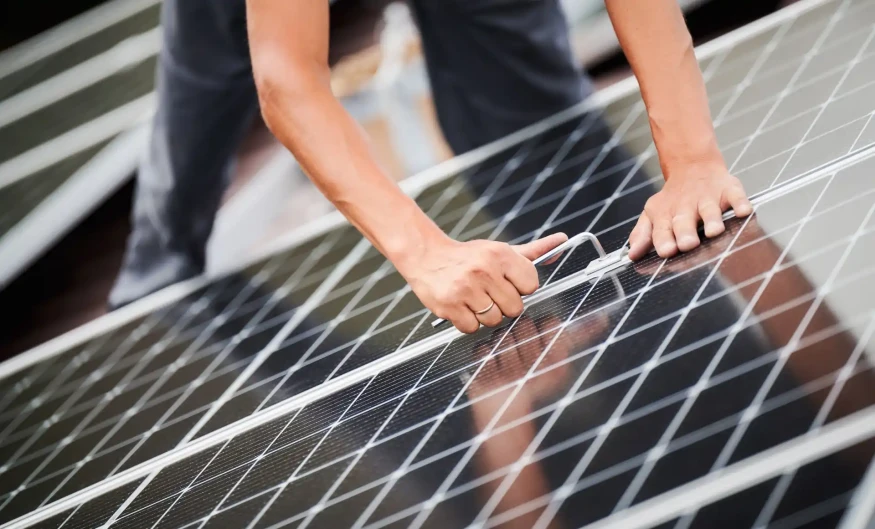
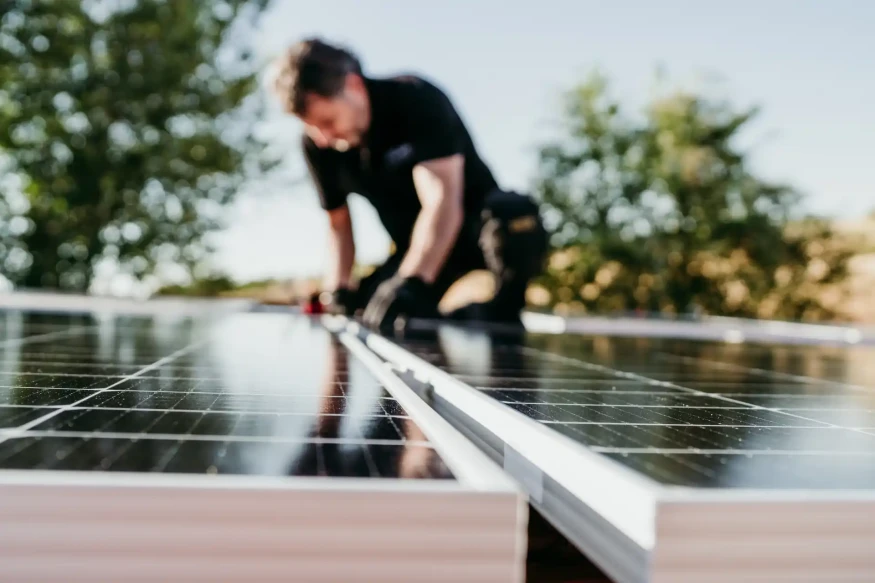
It is important to use a certified and experienced installer to ensure that your solar PV system is installed safely and performs as efficiently as possible. Cable management, correct torque on connections, appropriate cable routing and compliant DC isolation all depend on the competence of the installer.
High temperatures are not necessarily a safety concern for solar panels. However, poor-quality components, incorrect installation and neglected maintenance can increase the risk of faults, particularly during periods of extreme heat.
How Can Homeowners Reduce the Effects of Heat?
There are several ways homeowners can reduce efficiency losses in their solar PV systems, including:
Maximise Airflow and Ventilation:
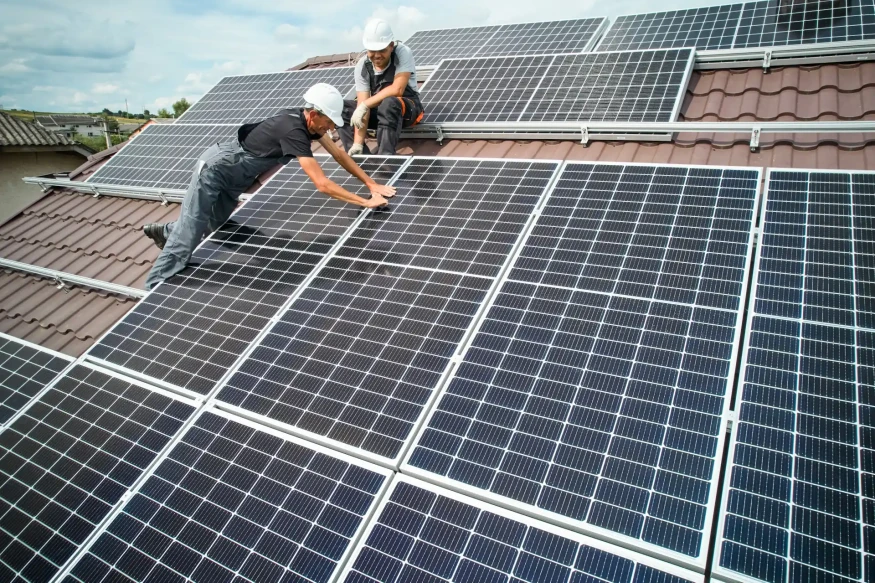
Ensure roof-mounted panels have sufficient clearance between the array and the roof surface to allow air to circulate underneath. Good ventilation can help keep panels cooler and reduce efficiency losses during hot weather. The appropriate clearance will depend on the roof design and mounting system.
Choose Panels with Lower Temperature Coefficients:
Select high-quality monocrystalline or heterojunction (HJT) solar panels with lower temperature-related power losses. Certain models from manufacturers such as Maxeon and Qcells have temperature coefficients of around -0.25%/°C to -0.27%/°C, meaning they lose less efficiency as their temperature rises above the standard testing temperature of 25°C.
Opt for Ground or Pole Mounting:
Consider ground-mounted or pole-mounted solar panels instead of panels fitted close to the roof, as these installations generally allow better airflow around the panels, helping them stay cooler in hot weather.
Keep Panels Clean:
Keep panels free from excessive dirt, dust, and debris to ensure they capture as much sunlight as possible. Heavy or uneven soiling can also contribute to localised hotspots, which may affect performance over time.
Use Reflective or Light-Coloured Roofs:
Light-coloured or reflective roofing materials can absorb less solar heat than darker surfaces, potentially reducing temperatures around rooftop solar panels. However, the benefits will depend on the roof material, ventilation, and installation design. Changing an existing roof solely to improve solar panel efficiency is unlikely to be worthwhile for most homeowners.
Are Some Solar Panels Better in Hot Weather?
If you are looking for solar panels that perform better than others in hot weather, you need to find panels with a temperature coefficient closer to 0% (such as -0.26% to -0.3% per °C rather than -0.5% per °C). Modern solar panel technologies handle heat differently based on their internal structure.
N-type TOPCon panels generally have temperature coefficients of around -0.30% to -0.26%/°C, offering good heat performance and high efficiency at a reasonable cost, making them a popular choice for residential installations. Heterojunction (HJT) panels typically perform slightly better in high temperatures, with coefficients of around -0.26% to -0.24%/°C, making them particularly suitable for hotter climates. P-type PERC panels, on the other hand, tend to have higher temperature-related losses, with coefficients of approximately -0.35% to -0.39%/°C. Although generally cheaper to purchase, they lose more power as temperatures rise. These figures are typical ranges, and actual performance varies between manufacturers and individual panel models.
Buyers should always check the manufacturer’s datasheet as advertising only tells you how a panel performs in a laboratory at 25°C. Real-world roofs frequently exceed 50°C in the summer. There are two critical metrics a buyer should check:
Temperature Coefficient of Pmax:
This number tells you exactly how much power the panel loses for every degree above 25°C. A panel advertised at 23% efficiency with a poor coefficient can easily be outperformed on a hot day by a 21% efficient panel with an excellent coefficient.
NMOT / NOCT Rating:
Nominal Module Operating Temperature (NMOT) indicates how hot a solar panel is expected to operate under specified outdoor testing conditions. A lower NMOT can suggest that a panel runs cooler under comparable conditions, although actual temperatures will depend on sunlight, wind, and installation design.
Conclusion
Although extreme heat can reduce solar panel efficiency, it shouldn't be a major concern for UK homeowners considering solar energy. Longer daylight hours and stronger sunshine during summer generally outweigh the temporary losses in efficiency caused by higher temperatures.
Choosing good-quality solar panels, ensuring adequate ventilation, and using an experienced installer can help maintain performance throughout the year. As the UK experiences more frequent heatwaves, understanding how temperature affects solar panels will become increasingly important, but hot weather alone is unlikely to significantly undermine the long-term benefits of investing in solar energy.
Find a local installer
Welcome to the biggest directory of UK renewable energy companies