Yes, limitations in the local electricity network can restrict the size of the solar panel system that can be connected or the amount of electricity it can export to the grid. These limitations are commonly known as grid or network capacity constraints.
If someone is installing solar panels, they will usually want to connect the system to the local electricity network so that surplus electricity can be exported. However, the local Distribution Network Operator (DNO) must ensure that the network can safely accommodate the additional generation.
Electricity network capacity is more constrained in some parts of the UK than others, affecting how much solar generation can be connected or exported to the grid. For most smaller domestic installations this does not necessarily prevent solar panels being installed, but larger domestic and commercial systems can face export restrictions, additional connection requirements, reinforcement costs, or delays.
Problems with UK electricity grid connections have got considerably worse in recent years with severe bottlenecks and delays stretching up to a decade becoming a major crisis by 2025/2026.
COMPARE PRICES FROM LOCAL INSTALLERS
Compare prices from local companies fast & free
Enter your postcode to compare quotes from leading professionals. We promise to keep your information Safe & Secure. Privacy Policy
Speculative and stalled applications are one of the causes of these connection delays with projects historically able to remain in the queue despite not being ready to proceed. The problem has been compounded by the time required to build and reinforce electricity network infrastructure as renewable generation and demand for new connections have increased. Grid infrastructure investment has also lagged significantly behind the fast-paced growth of renewable energy generation between 2010 and 2020.
The rapid growth of renewable generation placed increasing pressure on electricity network capacity during the 2010s. As the cost of solar and battery technology fell, the number of connection applications increased rapidly. The legacy “first-come, first-served” queue eventually became heavily congested, with speculative or stalled projects occupying capacity ahead of projects that were ready to proceed. By 2025, the connection queue had grown to more than 700GW, leaving some projects facing connection waits of five to ten years or more. These delays have affected investment in renewable energy and other low-carbon infrastructure, while grid capacity constraints have also delayed housing and commercial developments in some parts of the country.
How Does Rooftop Solar Connect to the Electricity Grid?
Rooftop solar connects to the electricity grid by converting direct current (DC) solar power into usable alternating current (AC) that can be used in your property. Any surplus electricity that is not used on site can then be exported to the grid through the property’s electricity meter. The local Distribution Network Operator (DNO) has responsibility for the distribution network. Larger systems generally require greater involvement from the DNO.
Here’s an outline of the grid connection process:
1. Generating Power (DC)
- Solar panels absorb sunlight and create direct current (DC) electricity.
- This electricity cannot be used directly by standard home appliances or safely fed into the public utility grid in that state.
2. Converting Power (AC)
- The DC wiring runs into a solar inverter (such as a string inverter or microinverters).
- The inverter changes the DC electricity into alternating current (AC) electricity, which matches the voltage and frequency of the main electricity network.
3. Powering the Home First
- The converted AC power flows from the inverter into your home's consumer unit or main electrical panel.
- Your home's active appliances use this clean solar energy immediately.
4. Managing Surplus Energy
- If your panels make more electricity than your home needs, the surplus either charges a home battery system (if installed) or flows outward.
- Extra energy that isn't used or stored goes through your bidirectional (smart) meter and out into the public electricity distribution network.
5. Grid Safety Controls
- Standard grid-connected solar systems are designed to stop supplying electricity during a grid outage through anti-islanding protection, preventing electricity from being fed into the network while engineers may be working on it.
Can the Grid Stop You Installing Solar Panels?
Your local Distribution Network Operator (DNO) can restrict or delay you from installing a standard grid-connected solar system if your local grid capacity cannot handle the extra exported power. However, grid restraints don’t necessarily mean that you can’t install a solar PV system.
If you’re planning to install solar panels at home, you’ll likely come across something called a DNO application. Your Distribution Network Operator (DNO) is the company that owns and operates the electricity cables in your area. Their job is to manage the safe and reliable delivery of electricity to homes and businesses. Your DNO needs to know if you’re installing a system like solar panels or battery storage that connects to the grid. That’s because your system could export electricity to the grid, and the DNO must check that the local network can handle it. The DNO will check whether your local electricity network has the capacity to take on the extra power your solar panels will produce. In some cases, upgrades might be needed. The DNO will also ensure your solar setup meets all the technical and safety standards, helping to prevent any issues like voltage spikes or interference with other homes on the grid.
Your installer will submit a DNO application to your local electricity network operator asking for permission to connect your solar panel or battery system to the grid. Batteries can increase self-consumption and potentially reduce export, although adding a battery doesn't automatically solve a grid-connection problem. Depending on your system size and setup, the application might be required before installation or simply submitted as a notification after installation. This is governed by UK standards known as G98, G99, and G100.
How the Grid Rules Work in the UK
G98 (Smaller installations): Many smaller domestic installations can be connected under the simplified G98 process where the equipment meets the relevant technical requirements. The commonly encountered limit for a single-phase installation is 16A per phase (approximately 3.68kW), with the DNO generally notified after commissioning.
- G99 Approval (Large Systems): For systems above 3.68 kW per phase, you must apply and wait for approval before installation begins. The DNO can refuse or require network upgrades if the local infrastructure cannot support the export capacity.
- G100 (Export Limitation): Where the local network cannot accommodate the full potential export from a solar or battery system, the DNO may permit the installation with an approved export-limitation scheme. This limits the amount of electricity that can be exported to the network while potentially allowing a larger system to be installed for on-site use.
DNOs rarely restrict small solar systems rated at 3.68 kW or less per phase (under G98 regulations).
There can be several potential outcomes from your DNO application:
- Full export permitted.
- Export limited to a specified level.
- An export-limitation system required.
- Network reinforcement required.
- Connection delayed.
- In some cases, the proposed system may need redesigning.
Does Grid Capacity Affect Smart Export Guarantee Payments?
Being able to export electricity to the grid does not automatically mean you will be paid for it through the Smart Export Guarantee (SEG). Grid connection and export permission are separate from eligibility for an SEG tariff.
Your local Distribution Network Operator (DNO) can restrict the amount of electricity a solar installation is permitted to export if the local network cannot safely accommodate the additional generation. For larger systems that require approval before connection, network constraints can also result in delays, reinforcement requirements, or changes to the proposed system design. However, an export restriction does not necessarily mean that solar panels cannot be installed.
The Smart Export Guarantee, on the other hand, is a scheme under which participating electricity suppliers pay eligible small-scale generators for electricity they export to the grid. To receive payments, you need to meet the supplier’s eligibility requirements and have an appropriate meter capable of recording exported electricity.
This means a property could be technically capable of exporting solar electricity but not receive SEG payments if it has not signed up to an eligible export tariff. Equally, joining an SEG tariff does not override any export limit imposed as part of the property's grid connection.
Are Grid Constraints a Bigger Problem for Commercial Solar?
Even though over 90% of suitable commercial roof space in the UK remains unused, it isn't as simple as covering every square metre of warehouses, factories, offices, retail buildings, or farms with solar panels. Although a business may have the available roof space for a megawatt-scale installation, the economically and technically viable system size depends on several factors, including on-site electricity demand and grid constraints. Connecting a 100kW, 500kW or multi-MW commercial rooftop solar installation to the electricity grid is fundamentally different from connecting a typical household system.
Before investing in commercial solar, businesses must assess several key constraints:
On-Site Electricity Consumption:
Sizing a solar array around a business's daytime electricity consumption can improve the return on investment by maximising the amount of electricity used on site. However, the most economical system size will also depend on installation costs, export arrangements, and the business's overall electricity demand.
Behind-the-Meter Consumption:
Financial viability changes dramatically based on whether most of the power is consumed directly on-site (saving retail electricity rates) or sold back to the grid (earning sometimes lower export tariff rates).
Local Network & Connection Capacity:
The site’s existing electrical infrastructure and the local grid's capacity determine how much power can safely flow through the system without causing voltage issues.
DNO Requirements & Export Limits:
Distribution Network Operators (DNOs) assess commercial connections to ensure they meet the necessary technical and safety requirements. If your Maximum Export Capacity (MEC) is strictly limited, a large solar system might be forced to curtail or turn off clean energy because the power grid cannot accept it.
Grid Reinforcement Costs:
If the local network cannot handle your proposed solar generation, the DNO may require grid reinforcement. These infrastructure upgrade costs are often passed to the business, occasionally making oversized projects economically unviable.
Batteries and Flexibility Options:
Integrating battery storage or demand-side flexibility can help businesses manage grid export restrictions. Demand-side flexibility (DSF) involves adjusting, shifting, or reducing electricity consumption in response to factors such as changing electricity prices or network constraints. Battery storage allows businesses to retain surplus solar generation for use later, potentially reducing the need to export electricity during periods of high solar production.
There are some key technical and procedural differences between residential and commercial solar as detailed below:
Single-Phase vs. Three-Phase Power Dynamics
Residential:
Most homes operate on a single-phase Low Tension (LT) supply (typically 230V in the UK/EU). Smaller domestic solar installations can often connect using standardised equipment and simplified DNO procedures.
Commercial:
Larger commercial and industrial premises commonly use three-phase electricity supplies, typically operating at 400V, although some larger facilities connect to the network at higher voltages. Commercial solar installations must be designed to meet the technical requirements of the site's electrical supply, including managing phase balance, voltage, and potential reverse power flows. These considerations can make larger commercial installations more complex than typical domestic systems.
High Voltage Connections and Transformers
Residential:
Households inject power directly into the local low-voltage grid without changing any upstream equipment.
Commercial:
Larger commercial solar installations may require additional electrical infrastructure, particularly where a business operates its own substation or connects to the distribution network at a higher voltage.
One consideration is whether the site's existing transformer and electrical equipment can safely accommodate electricity flowing back towards the grid when solar generation exceeds on-site consumption.
For larger installations, particularly those approaching megawatt scale, additional transformers, protection equipment, or network upgrades may be required. These requirements can increase installation costs and affect the financial viability of a commercial solar project.
Can Battery Storage Help Overcome Grid Constraints?
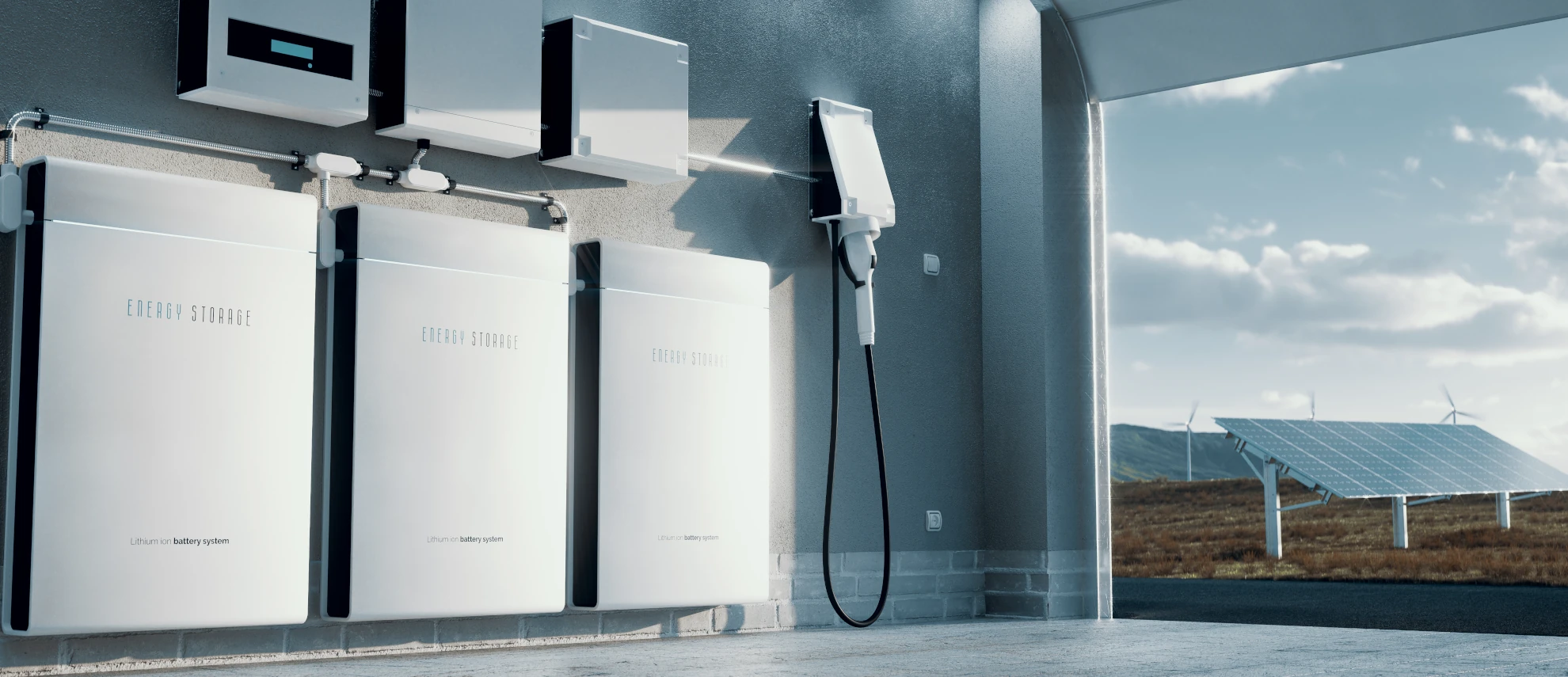
Battery energy storage systems (BESS) can help manage grid constraints by storing excess electricity, reducing peak demand, and improving the flexibility of the electricity network. In some circumstances, battery storage can also reduce the need for immediate network reinforcement, although it cannot eliminate every grid connection restriction.
How Battery Storage Relieves Grid Constraints:
Decongesting Transmission Lines:
Batteries placed at strategic points on the network can absorb electricity during periods of network congestion and discharge it when additional capacity is available. This can reduce pressure on transmission infrastructure, help prevent renewable electricity from being wasted and, in some circumstances, reduce or delay the need for expensive network upgrades.
Curtailment Reduction:
In regions with high wind or solar generation (such as Scotland), batteries store surplus green energy that would otherwise be curtailed because of network constraints.
Localised "Buffer" for High Demand:
Commercial sites, housing developments, and electric vehicle (EV) charging depots can use on-site batteries to potentially reduce or defer the need for costly grid connection upgrades. Batteries slowly charge during off-peak hours and discharge rapidly when heavy power is needed.
Instead of waiting years for heavy transmission line or substation expansions, developers and network operators can use localised batteries as a "buffer" to manage peak demand.
Supporting High-Power Electrification:
On-site BESS units allow commercial fleets, data centres, or housing developments to install fast EV chargers or scale up operations without waiting for costly local grid connection upgrades.
What Is Being Done to Improve Britain's Electricity Grid?
The UK is undertaking the biggest overhaul of its electricity grid in generations to make the transition from fossil fuels to renewables and other low-carbon energy sources. National Energy System Operator (NESO) has replaced the old first-come, first-served approach with a system intended to prioritise projects that are ready and needed. Additional investment in electricity network infrastructure could eventually reduce connection constraints for some larger commercial installations. However, Great British Grid will not automatically remove DNO export restrictions or eliminate connection delays. A warehouse or factory consuming much of its solar generation on site may be able to install a larger array with export limitation, depending on its connection arrangements.
The Great Grid Upgrade and Infrastructure
The Great Grid Upgrade:
National Grid is undertaking major investment in electricity transmission infrastructure through its Great Grid Upgrade programme, including new high-voltage transmission lines, substations and connections designed to transport renewable electricity around the country.
Subsea Links:
Projects such as Eastern Green Link are being developed to transport electricity between Scotland and England, helping reduce transmission constraints and move renewable power towards areas of higher demand.
The launch of the Great British Grid (GBG):
Announced by the UK Government on 29 September 2026, Great British Grid is a new publicly owned body within Great British Energy. It is intended to accelerate investment in electricity network infrastructure, improve grid connections and help accommodate growing demand for clean electricity.
Fast-Tracking Connections:
The government and NESO are reforming the grid connection queue to prioritise viable projects, with more than 300GW of previously queued capacity deprioritised under the new arrangements. New self-build connection rules are being introduced to help developers build links faster.
Smart Tech and Market Reforms
Smart Meters and Demand Flexibility:
Increasingly more smart and advanced meters are being installed, and programmes like the Demand Flexibility Service (DFS) allow millions of households to save power during peak winter hours.
Market Rules:
Changes to electricity market arrangements and network regulations are also intended to improve how electricity is generated, distributed, and consumed, supporting a more flexible energy system.
Will the UK’s Electricity Grid Be Able to Cope with More Solar?
Britain’s electricity grid will require significant investment and upgrades to deal with the expected growth in solar and other renewable generation, although major reforms and network improvements are already underway.
Key Grid Challenges
Massive Connection Queue:
The national connection queue grew to over 700 gigawatts (GW) before recent reforms by NESO tried to filter out speculative or unviable projects.
Bottlenecks and Curtailment:
Legacy transmission systems often cannot move surplus renewable power from where it is generated to where it is needed, leading to wasted power and costly constraint shutdowns.
Delivery Slippage:
Although connection reforms are intended to accelerate viable projects, implementing the new arrangements has itself resulted in delays to some connection offers.
Solutions and Progress
Massive Infrastructure Investment:
Ofgem approved an initial £28 billion of investment in Britain's gas and electricity networks in December 2025, including £10.3 billion for electricity transmission infrastructure. The regulator expects total investment across both networks to reach approximately £90 billion by 2031, helping modernise existing infrastructure and accommodate growing electricity demand.
Smaller Projects Move Faster:
Smaller solar installations connecting to local distribution networks may face fewer connection requirements than large transmission-connected projects, although timescales depend on local network capacity and the complexity of the proposed installation.
Smart Flexibility:
Matching supply and demand in real time so that when electricity demand spikes or generation drops, grid operators can ask homes and businesses to temporarily lower or shift their power use (such as delaying EV charging or turning down heat pumps). This can help to prevent blackouts and avoid using expensive, polluting peak-gas power plants. Also, when renewable sources like wind or solar generate surplus electricity during periods of strong renewable generation and low demand, operators can pay or incentivise users to absorb extra energy (e.g., heating water tanks, running appliances, or charging batteries). This stops clean energy from being wasted.
The UK electricity grid is undergoing major upgrades to accommodate rapidly growing renewable energy generation. While grid constraints rarely prevent smaller domestic solar installations, they can restrict exports and cause delays or additional costs for larger domestic and commercial systems. Grid connection reforms, battery storage, increased network investment, and the new Great British Grid could help unlock significantly more rooftop and commercial solar capacity in the years ahead.
Find a local installer
Welcome to the biggest directory of UK renewable energy companies