Installing solar panels and owning an EV should reduce your running costs, yet many homeowners don’t see the savings they expect. The issue is rarely the technology itself, but how solar generation and EV charging align in everyday use.
As adoption grows, this question is becoming more relevant. According to the International Energy Agency, electric cars accounted for around 18% of global car sales in 2023, highlighting how quickly the shift is happening.
What really determines your savings is system setup, timing, and how efficiently you use the energy you generate. In this guide, you’ll learn how solar EV charging works, how many panels you need, what it costs, and how much you can realistically save.
Charging an EV with Solar Panels at Home
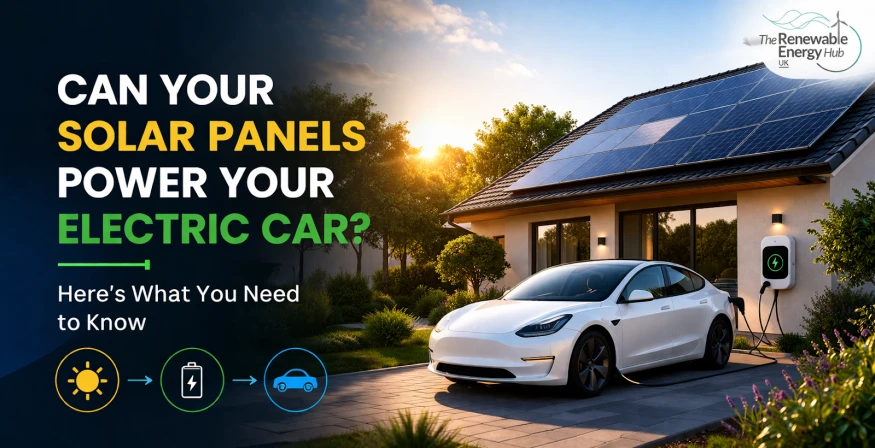
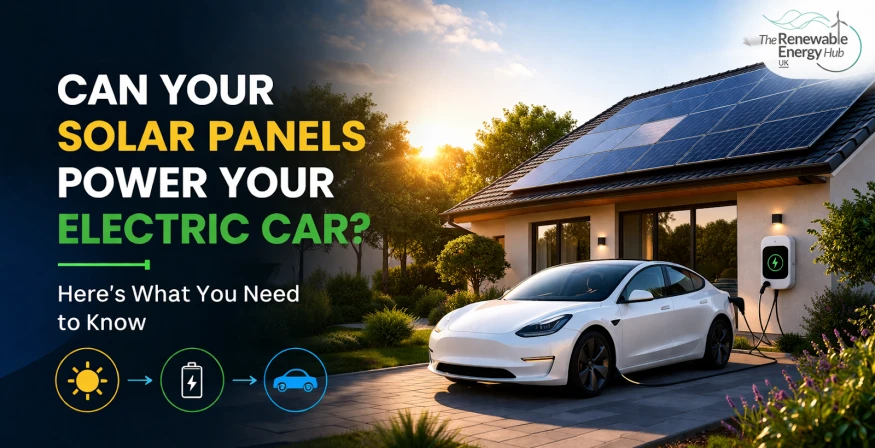
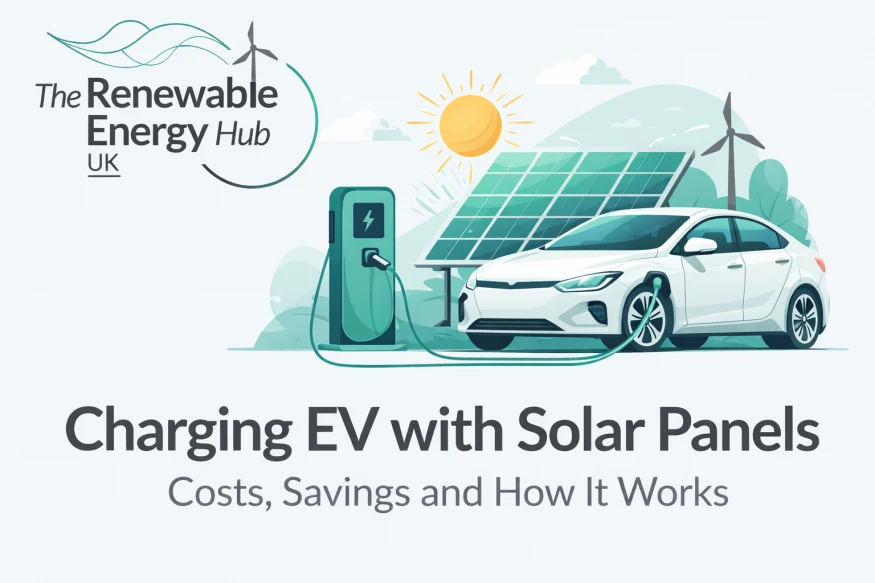
Charging an EV with solar panels is practical for most homes, but it doesn’t mean your car runs entirely on solar energy. In reality, it’s about reducing grid usage by using solar power whenever it is available.
Home Charging Setup
A typical setup includes a rooftop solar system connected to your home and an EV charger. The electricity generated during the day can power household appliances and charge your EV at the same time.
However, the amount of energy available for your car depends on how much solar power your system produces and how much your home is already using.
How Energy Is Used in Real Conditions
Solar energy is used in a priority order. Your home consumes electricity first, and any excess energy can then be used for EV charging.
When solar generation is not enough, the system automatically draws electricity from the grid. This ensures your EV continues charging without interruption, regardless of solar output.
Why Most Systems Use a Hybrid Approach
Solar panels only generate electricity during daylight hours, while EV charging often happens in the evening or at night. Because of this mismatch, most homes rely on a combination of solar and grid electricity.
This hybrid approach allows you to benefit from solar energy when available while maintaining consistent charging when it is not.
Understanding how solar EV charging works is important, but having the right setup in place is what determines how efficiently it performs.
What Do You Need to Charge an EV with Solar
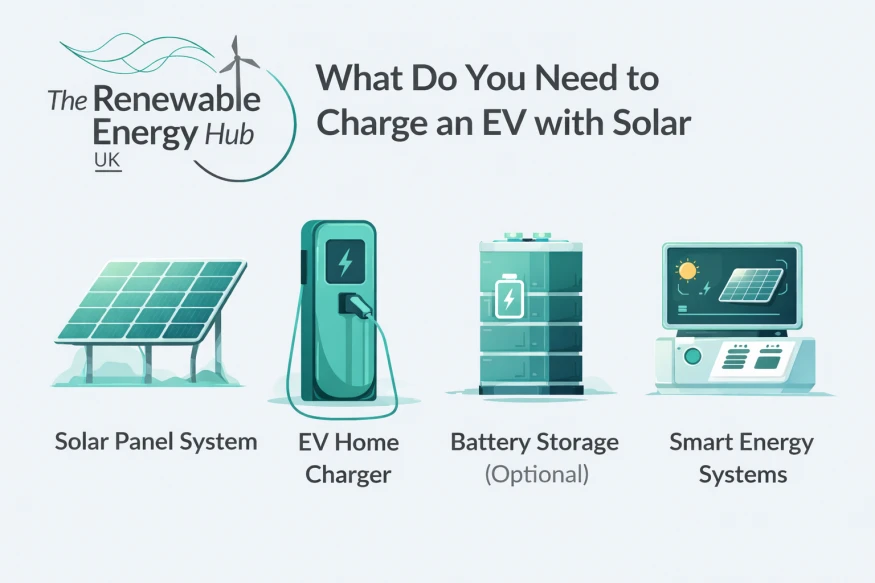
Setting up solar EV charging is relatively simple, but real savings depend on having the right components working together. The quality of your setup directly impacts how much solar energy you actually use.
Solar Panel System
Your solar system must generate enough electricity to cover both household consumption and EV charging demand. A small system may meet basic needs but often fails to produce surplus energy for your car.
A properly sized system ensures consistent generation and improves solar self-consumption, which is where the real financial benefit comes from.
If you are still evaluating system size, costs, or panel types, you can explore detailed options and compare setups on our solar panels page to understand what works best for your property. Renewable Energy Hub also allows you to connect with verified installers and request tailored quotes based on your energy usage.
EV Home Charger
A standard charger will power your EV, but a smart charger significantly improves efficiency. It allows you to schedule charging around solar generation, prioritise your own energy, and avoid higher tariffs.
This level of control ensures that more of your EV charging is powered by solar rather than the grid, directly lowering your running costs over time.
Battery Storage (Optional)
A battery stores excess solar energy so it can be used later, especially for night-time EV charging. However, it only delivers strong value if your system regularly produces surplus electricity and your usage justifies the cost.
Without sufficient excess generation, the return on investment becomes slower, making it a secondary upgrade rather than an essential component.
Smart Energy Systems or Solar Diverters
Solar diverters and smart energy systems redirect unused solar electricity to your EV charger instead of exporting it to the grid. They increase the amount of solar energy you actually use without requiring a large investment like a battery.
This makes them a practical solution for improving efficiency and achieving better savings from your existing solar setup.
Having the right components is essential, but to optimise your system, you also need to understand how much energy your EV actually requires.
How Many Solar Panels Are Needed to Charge an EV
The number of solar panels required depends more on how much you drive and how much energy your system produces than on the EV itself. Matching generation with usage is key to maximising savings.
Factors That Affect Solar Requirement
Your solar requirement is shaped by three variables: daily driving distance, your EV’s efficiency, and how much sunlight your system receives. Higher mileage increases energy demand, while better vehicle efficiency reduces it.
At the same time, system size and roof conditions determine how much usable solar energy you can generate to meet that demand.
Example Calculation
A practical example makes this easier to understand.
|
|
|
|
|
|
|
|
|
|
|
|
Now compare this with solar output:
|
|
|
|
|
|
|
|
|
After covering household usage, only part of this energy is available for EV charging. In most cases, solar can offset a significant portion of your charging needs, but rarely all of it.
Seasonal Variations
Solar generation varies throughout the year, which directly affects how much of your EV charging comes from solar. During summer, longer daylight hours often create surplus energy, making solar charging easier. In winter, lower generation reduces availability, meaning your EV will rely more on grid electricity despite having a solar system installed.
Once you understand how much energy your EV needs, the next step is evaluating what it costs and how much you can actually save.
Costs, Savings, and Payback of Solar EV Charging
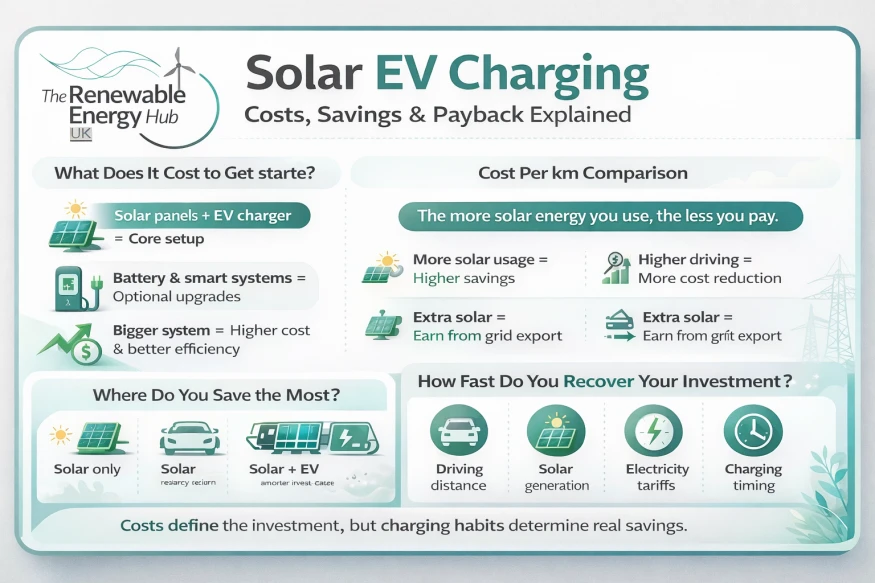
Installing solar for EV charging involves an upfront investment, but the real value comes from how it reduces long-term running costs and improves energy efficiency over time.
Installation Costs and System Components
A solar EV charging setup typically includes solar panels and an EV charger, while batteries and smart energy systems are optional additions.
The total cost depends on system size and the components you choose. Larger systems and advanced features increase upfront investment but also improve how much solar energy you can use for EV charging.
Cost per km Compared to Grid and Fuel
Once installed, solar energy offers the lowest cost per kilometre because you are using electricity you generate yourself.
In comparison, grid electricity comes at a variable cost depending on tariffs, while petrol and diesel remain the most expensive options. Over time, using solar energy significantly reduces your overall driving cost.
How Much You Actually Save
Your savings depend mainly on how much of your EV charging is powered by solar energy. The more you rely on your own generation instead of grid electricity, the greater your cost reduction.
Higher driving distances increase savings because more energy is offset by solar. In addition, any excess electricity exported to the grid can provide extra value, even if export rates are lower than retail prices.
Payback Period and Return on Investment
The payback period varies based on system size, usage, and configuration. A solar-only system typically provides steady returns over time.
When combined with EV charging, more solar energy is used directly, which often improves efficiency and shortens the payback period. Adding a battery increases flexibility but usually extends the return timeline due to higher upfront costs.
While costs and savings define the financial value, how you charge your EV plays an equally important role in determining real-world efficiency.
Smart Charging and Energy Management
How and when you charge your EV plays a major role in how much solar energy you actually use, directly affecting your overall efficiency and long-term cost savings.
Charging During Solar Generation
Charging your EV during daylight hours allows you to use solar energy as it is generated. This is the most efficient and cost-effective way to maximise your own energy usage.
However, this approach depends on your daily routine and may not always be practical if your vehicle is not at home during the day.
Using Off-Peak Electricity When Solar Is Not Available
When solar energy is not available, especially at night or during low generation periods, off-peak electricity tariffs provide a cost-effective alternative.
Charging your EV during these lower-rate periods helps maintain predictable costs and avoids expensive peak-hour electricity pricing.
Balancing Solar and Grid Charging
This approach builds on the hybrid system most homes already use, helping you optimise when and how that energy is consumed.
This hybrid strategy ensures consistent charging, improves efficiency, and avoids unnecessary energy costs.
Key Factors That Improve Charging Efficiency
Several factors influence how effectively your EV uses solar energy:
- Electricity tariffs and time-of-use pricing
- Charging timing and daily usage patterns
- System size and available solar generation
- Roof direction, tilt, and shading
Optimising these factors helps you maximise solar usage while keeping charging convenient and cost-efficient.
When managed effectively, solar EV charging offers several practical and financial benefits that go beyond just reducing energy costs.
Benefits of Charging an EV with Solar Energy
Charging your EV with solar energy improves how efficiently you use the energy you generate, giving you more control, predictability, and long-term value.
- Lower long-term running costs
Using solar energy for EV charging reduces your dependence on paid electricity. Once installed, every unit of solar energy you use directly lowers your cost per kilometre, making long-term savings more consistent and less affected by rising energy prices. - Reduced reliance on grid electricity
Generating your own electricity means you are less exposed to fluctuations in energy tariffs. This becomes especially valuable over time, as electricity prices continue to change, giving you more stability in your monthly expenses. - Greater control over energy usage
With the right setup, you can decide when and how your EV charges. This allows you to prioritise solar usage, avoid peak pricing, and manage your overall energy consumption more efficiently based on your daily routine. - Lower environmental impact
Charging your EV with solar energy lowers your overall carbon footprint by reducing reliance on grid electricity generated from fossil fuels. Even partial solar usage contributes to cleaner energy consumption over time.
While these benefits are significant, solar EV charging also comes with practical limitations that should be considered before making a decision.
Limitations and Practical Considerations
Solar EV charging offers strong benefits, but it is not a perfect solution. Understanding these limitations helps set realistic expectations and ensures you plan a system that performs effectively in real-world conditions.
Weather and Seasonal Impact
Solar generation is not consistent throughout the year. During winter or prolonged cloudy periods, energy output drops significantly, reducing the amount available for EV charging.
This means your system will rely more on grid electricity during certain months, making it important to factor seasonal variation into your overall savings expectations.
Roof Space Requirements
The size and condition of your roof directly limit how much solar capacity you can install. Smaller or shaded roofs reduce total energy generation, which can restrict how much of your EV charging is powered by solar.
This makes system sizing a critical factor, especially if you are trying to support both household usage and vehicle charging.
Night Charging Limitations
Solar panels only generate electricity during daylight hours, which creates a mismatch with typical EV charging patterns. Without a battery, night-time charging will rely entirely on grid electricity. This increases reliance on grid electricity during nighttime charging.
Upfront Investment
The initial cost of installing solar panels, EV chargers, and optional components like batteries can be significant. While long-term savings are strong, the financial return depends on usage and system performance.
Careful planning is essential to avoid overspending on features that may not deliver proportional value in your specific setup.
With both benefits and limitations in mind, the key question becomes whether this setup actually makes sense for your situation.
Is Solar EV Charging Worth It for You
Solar EV charging can deliver strong financial and practical benefits, but only when your usage and system are aligned. The real value depends on how effectively you can use the solar energy you generate.
At this stage, comparing system estimates and installer approaches can help validate your numbers, and Renewable Energy Hub can be useful for reviewing multiple quotes and options in one place.
When Solar EV Charging Delivers the Best Value
Solar EV charging works best when you drive regularly and have a system capable of generating consistent surplus energy. If you can charge during the day or optimise usage with smart controls, you maximise self-consumption.
This combination leads to lower running costs, faster payback, and better overall efficiency from both your solar system and EV.
When Solar EV Charging May Not Be Worth It Yet
If your driving usage is low, your energy demand may not justify the investment. Similarly, limited solar generation due to small system size or poor roof conditions can reduce available energy for charging.
In these cases, savings are slower, and the financial return may not be strong enough to prioritise solar EV integration immediately.
How to Decide Solar Investment Based on Your Usage?
The most practical way to decide is to compare your EV’s monthly energy consumption with your available solar surplus. If a large portion of your charging can be covered by solar, the financial case becomes strong. If not, the benefit is still present, but savings will build more gradually over time rather than immediately.
If you decide to move forward, choosing the right setup and installer will directly impact performance, cost, and long-term reliability.
Choosing the Right Installer and Setup That Actually Works
The performance of your solar EV setup depends as much on installation quality as the equipment itself. The right installer ensures your system is efficient, compatible, and designed around your actual usage from the start.
Work with Certified and Experienced Installers
A qualified installer will assess your energy usage, roof conditions, and EV charging needs before recommending a system. Poor system design can significantly limit performance and savings.
Certified professionals ensure correct installation standards, safety, and long-term reliability, which directly impacts how efficiently your solar and EV setup performs.
Compare Quotes Based on System Design, Not Just Price
Choosing the cheapest option often leads to compromises in system sizing or component quality. Instead, compare how each installer plans your setup, including panel capacity, charger compatibility, and energy optimisation.
A well-designed system may cost slightly more upfront but delivers better efficiency, higher savings, and a stronger return over time.
Choose an Integrated Solar and EV Setup
Working with a provider that handles both solar installation and EV charging ensures better compatibility between components. Integrated systems are designed to work together, reducing technical issues and improving energy flow.
This approach simplifies installation, improves performance, and ensures your setup is optimised for both household energy use and EV charging.
Ultimately, solar EV charging is less about generating energy and more about using it efficiently.
Conclusion
Charging your EV with solar panels is not about perfection; it is about using your own energy more efficiently and reducing long-term costs. When planned correctly, it can significantly improve the value you get from your solar system.
The difference comes down to how well your system is designed and used. A well-designed system can maximise savings, while a poor one can limit your returns.
If you are planning solar or EV charging, the right setup makes the difference between average and meaningful savings. Use Renewable Energy Hub to compare trusted installers and build a system designed around how you actually use energy