Energy independence is becoming a serious topic for many UK homeowners. Recent data from Solar Now states that interest in solar power has surged by 27% as households look for ways to future-proof their properties against global energy shocks.
The number of certified solar panel installations in 2025 has now surpassed 203,125, breaking the previous annual record set back in 2011, as per MSC Certified 2025 reports.
This record-breaking surge reflects a growing desire to future-proof properties against rising costs and grid reliability concerns. These systems allow a property to produce and store its own electricity without relying on the national grid.
But one question comes up quickly during research. How much does an off-grid solar system actually cost in the UK?
The answer depends on several factors, such as system size, battery storage, installation complexity, and property energy usage. In this guide, we explain the real costs involved, what affects pricing, and what homeowners should consider before installing an off-grid system.
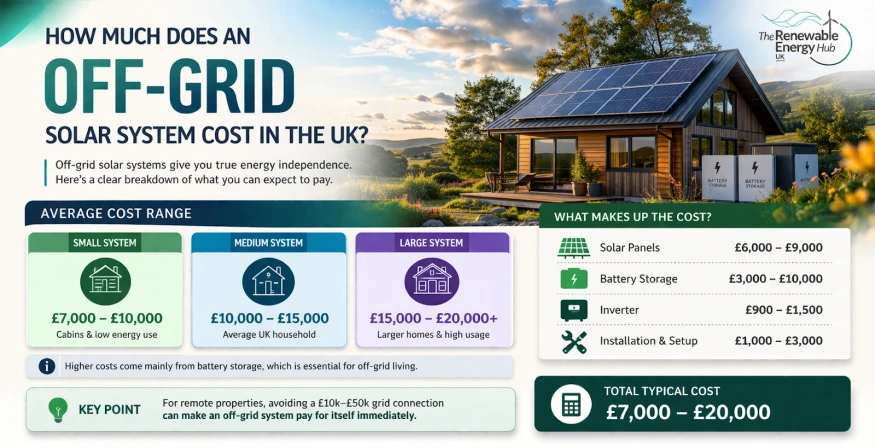
What is the Average Cost of Off-Grid Solar in 2026?
The price of an off-grid system depends mostly on how much electricity you need to use and how many days of backup power you want for when the sun is not shining.
For a small cabin or a garden office, costs are manageable. However, for a full-sized family home that runs entirely without a grid connection, the investment is significant.
Estimated Cost Breakdown by System Size
|
|
|
|
|
|
|
|
|
|
|
|
|
|
|
|
These figures include the solar panels, high-capacity batteries, off-grid inverters, mounting kits, and professional installation. It is important to note that since you are off-grid, you cannot benefit from the Smart Export Guarantee because you are not sending any power back to the network.
Key Components That Affect the Cost of an Off-Grid Solar System
When you go off-grid, your equipment list grows. Each part plays a vital role in ensuring you never lose power:
1. Battery Storage
Battery storage is usually the largest expense in an off-grid system. Unlike grid-connected homes, where batteries are optional, off-grid properties rely on batteries to store electricity generated during the day.
Most systems need enough storage to power the home for at least two or three days without sunlight. As of 2026, a high quality 10kWh lithium battery system typically costs between £5,000 and £8,000. Homes that want stronger energy security may install 20kWh or more to manage the winter months when solar generation is lower.
2. Off-Grid Inverters and Charge Controllers
Off-grid systems require specialised inverters and charge controllers to manage electricity flow. A standard solar inverter is designed to shut down when the grid goes offline for safety reasons. Off-grid inverters work differently because they create their own independent power system.
These units control how energy flows between the solar panels, batteries, and household appliances. Depending on power capacity and system design, off-grid inverters usually cost between £1,500 and £3,500.
3. Solar Panels
Solar panels are a part of the system that captures sunlight and converts it into electricity. While panel technology continues to improve, prices have remained relatively stable in recent years.
For a medium-sized system, homeowners typically spend between £3,000 and £5,000 on solar panels. Costs can vary based on panel efficiency, brand, and design choices such as premium all-black panels or standard modules.
What Can These Off-Grid Solar Systems Power?
The capability of your off-grid system depends entirely on how many panels you have and the size of your battery storage. Since you are not connected to the grid, you have a finite energy bucket to use each day.
- Small Systems: These are perfect for low-demand spaces. You can easily power LED lighting, charge laptops and phones, run a small, efficient fridge, and use a TV for a few hours. These are popular for workshops or remote cabins.
- Medium Systems: This is the sweet spot for a modest UK home. It can handle everyday essentials like a standard fridge freezer, washing machine, microwave, and home office equipment. You will need to be mindful of using high-heat appliances like kettles or hair dryers at the same time.
- Large Systems: These systems are designed for full-time family living. They can support larger appliances, including dishwashers and even electric vehicle chargers, provided the battery bank is large enough to store the surplus energy generated during the day.
How Much Does Installation and Maintenance Cost?
While the equipment is a major part of the budget, the professional setup and long-term care are what ensure the system remains safe and efficient.
Installation Costs
In the UK, professional installation for an off-grid system usually costs between £2,000 and £5,000. This is higher than a standard solar install because it requires specialized electrical work to set up the off-grid inverter and complex battery management systems. This fee typically includes the labor, scaffolding, and final safety certifications.
Maintenance Costs
Solar panels are famously low-maintenance because they have no moving parts. However, off-grid systems require a bit more attention.
- Annual Health Check: A professional inspection every year costs around £150 to £250. This ensures your battery connections are tight and the inverter is performing correctly.
- Cleaning: The UK rain does a good job of cleaning panels, but if you live near the coast or in a dusty area, professional cleaning can cost about £100.
- Part Replacement: You should budget for a new inverter every 12 to 15 years, which may cost between £800 and £2,000.
What is the Return on Investment of Off-Grid Solar in the UK
Return on investment for an off-grid solar system works differently from a typical home solar setup. Instead of only saving on electricity bills, you may also avoid the high cost of connecting to the National Grid.
For remote UK properties, a new grid connection can cost between £10,000 and £50,000, depending on the distance to the nearest connection point. In these situations, installing an off-grid system can often make financial sense immediately.
For homes that choose to leave the grid, the typical payback period is around 10 to 15 years. While this is longer than grid-connected solar systems, the benefit is greater energy independence and protection from future energy price increases.
Factors That Influence Your Final Quote
No two off-grid projects are the same. Several practical factors will determine if your quote sits at the high or low end of the average.
- Your Daily Consumption: If you use high-energy appliances like electric ovens, power showers, or tumble dryers, you will need a much larger system.
- Property Location: Homes in the north of the UK receive less intensive sunlight than those in the south. This often means you need more panels to generate the same amount of energy.
- Roof vs Ground Mount: If your roof isn't suitable, you might need a ground-mounted array. While this can be more efficient because you can angle the panels perfectly, it often costs more due to the specialized framing and trenching required for cabling.
- Backup Generators: Most off-grid homeowners choose to integrate a backup petrol or diesel generator for emergencies. This can add another £1,000 to £3,000 to your initial budget.
How Can You Maximise Savings?
To get the most out of your investment, you need to align your habits with the sun.
- Energy Efficient Appliances: Every watt you do not use is a watt you do not have to buy a battery for. Switching to A-rated appliances can significantly reduce the size and cost of the system you need.
- Daytime Loading: Run your heavy loads, like the washing machine or dishwasher, in the middle of the day when the sun is strongest. This uses power directly from the panels and leaves your batteries full for the night.
- Smart Monitoring: Use a monitoring app to track your battery levels. Understanding your state of charge helps you decide if you can afford to watch an extra movie or if you should dim the lights on a cloudy day.
- Regular Cleaning: Keeping panels clear of debris can improve energy yield by up to 10%, which is vital during short UK winter days.
Is an Off-Grid System Right for You?
Choosing to go off-grid is a major decision. It offers total energy independence and protection against rising utility prices, but it requires a lifestyle change.
The Benefits
- Zero Monthly Bills: You will never receive an electricity bill again.
- Energy Independence: You are immune to grid power cuts or energy market volatility.
- Environmental Impact: You are powered by 100% clean, renewable energy
The Challenges
- High Upfront Investment: The cost of the batteries alone can be double the price of a standard solar setup.
- Energy Management: You have to be mindful of your usage, especially during the darker winter months.
- Maintenance: You are responsible for the entire system. While modern panels last 25 years, inverters and batteries may need replacing every 10 to 15 years.
Get Expert Guidance for Your Off-Grid Journey
Planning an off-grid solar system involves important decisions about system size, battery storage, and installation. Getting clear guidance early can help you avoid costly mistakes.
The Renewable Energy Hub connects you with vetted, MCS-accredited installers across the UK. You can get up to three tailored quotes and compare your options with no obligation and no pressure