Escalating gas prices have many UK homeowners feeling trapped by fossil fuels, yet the leap to green heating can feel overwhelming. Many of our older properties aren't naturally well insulated to retain heat.
We all want a lower carbon footprint, but rushing into a swap without an audit can be a headache. You don't want to invest in a system only to find it working overtime—spiking your electricity bills while your living room stays chilly.
2026 UK Heat Pump Statistics
- Market Milestone: 2025 saw a record 125,037 units sold—a 27% increase as adoption moves toward the mainstream (Source: CIBSE/HPA).
- Financial Support: The Boiler Upgrade Scheme (BUS) now provides a £7,500 grant, helping bridge the cost gap for air and ground source systems (Source: GOV.UK).
- Proven Reliability: 86% of households with a heat pump reported staying warm and comfortable during the 2025 winter cold snaps (Source: Elite Renewables/DESNZ).
- Efficiency Gains: Modern units deliver 300%–400% efficiency, producing up to four units of heat for every one unit of power used (Source: Energy Saving Trust).
Moving from national data to your doorstep, this checklist helps you audit your property for a successful transition. Assessing these technical areas ensures your move to renewable energy is both seamless and cost-effective.
The 2026 Heat Pump Readiness Summary
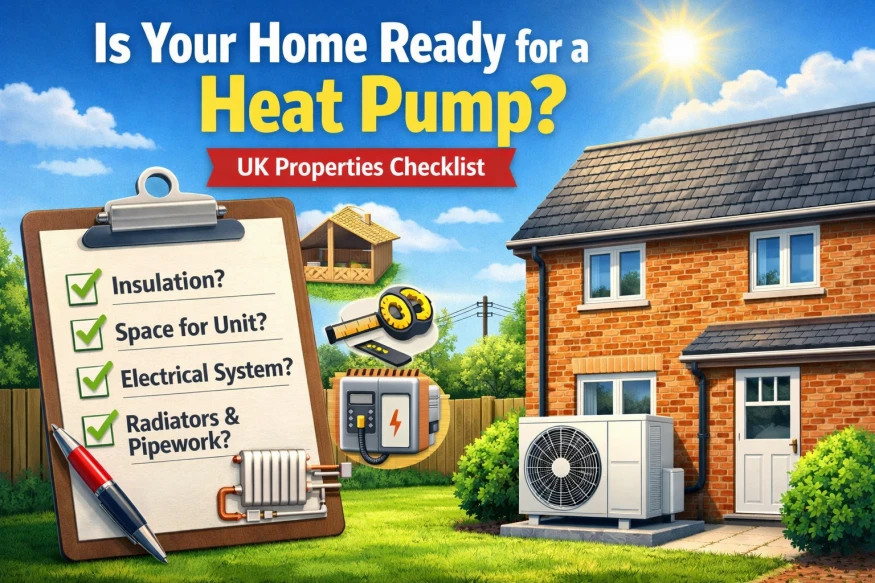
A UK property is considered "Heat Pump Ready" if it meets these five core criteria:
- High Thermal Retention: Minimum 270mm loft insulation and cavity/solid wall insulation.
- Modern Glazing: Double or triple glazing with a U-value below 1.6.
- Low-Temperature Emitters: Radiators (Type 22/33) or underfloor heating designed for 35°C–45°C flow.
- Internal Storage: Space for a 150L–300L hot water cylinder (required to replace combi-style heating).
- Outdoor Clearance: 1.5m² of clear space on a solid external base for airflow.
Is Your Home Heat Pump Ready? (The Feasibility Checklist)
To ensure a heat pump is actually more affordable to run, your home must meet certain technical thresholds. Use this checklist to audit your property.
Home Readiness & Technical Standards
|
|
|
|
|
|
|
|
|
|
|
|
|
|
|
|
|
|
|
|
|
|
|
|
Radiator & System Compatibility
Heat pumps are low-temperature systems, typically running at 35°C–45°C, whereas gas boilers blast heat at 70°C.
- Existing Radiators: You don't always need new ones. If your home is well-insulated, your current radiators may be "oversized" enough to work.
- The Upgrade: If a room stays cold, you may need a Type 22 or Type 33 (double/triple panel) radiator. These have a larger surface area to emit more heat at lower temperatures.
- Pipework: Systems with 15mm or 22mm copper pipes are ideal. Microbore piping (8mm–10mm) may require upgrades to ensure sufficient flow.
EPC Considerations & Property Value
In 2026, your Energy Performance Certificate (EPC) is a financial document.
- The Heat Pump Boost: Switching from a gas boiler to a heat pump can often improve a property's EPC rating from D to B.
- Landlord Regulations: With the target for rental properties to reach EPC C by 2030, a heat pump is the most direct route to compliance, avoiding the £10,000 "cost cap" trap for inefficient fossil fuel systems.
Long-Term Value: The 25-Year Outlook
Affordability is a marathon, not a sprint.
- Lifespan: A gas boiler typically lasts 10–12 years. An ASHP is rated for 20–25 years.
- Maintenance: Boilers require annual gas safety checks and are prone to internal combustion wear. Heat pumps are sealed units with fewer moving parts.
- Property Value: As the UK moves toward a future homes standard, houses with gas boilers may face brown discounts, while heat-pump-ready homes command a premium.
Cost Implications of Upgrades
If your home isn't heat pump-ready, you must factor in these one-time preparation costs.
|
|
|
|
|
|
|
|
|
|
|
|
|
|
|
|
|
|
|
|
Understanding the Fundamentals of Heat Pump Efficiency
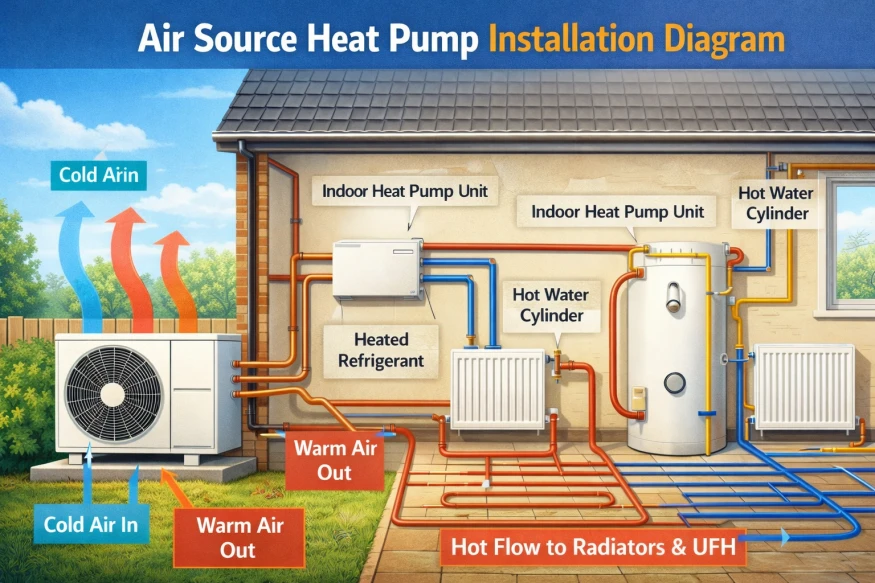
To determine if your home is ready, it is vital to understand how these systems operate differently compared to traditional boilers. To ensure the system delivers the promised savings and comfort, consider these core principles:
- The Thermal Envelope: A heat pump is most effective when your home acts as a "thermal flask. If your property loses heat faster than the pump can replace it, the system will consume more electricity to keep up, leading to higher bills.
- Lower Flow Temperatures: Unlike boilers that heat water to 70°C, heat pumps typically operate between 35°C and 55°C. This lower temperature is much more efficient but requires larger surface areas (like bigger radiators or underfloor heating) to distribute warmth effectively.
- Coefficient of Performance (CoP): This is the measure of efficiency. For every 1kW of electricity used, a well-installed heat pump can produce 3kW to 4kW of heat. Maintaining this high ratio depends entirely on how well-insulated your home is.
- Consistency Over Speed: Heat pumps are not designed for "quick blasts" of heat. They perform best when left to run at a steady rate, gradually reaching and maintaining your desired thermostat setting.
Moving from the theory of heat retention to the practicalities of your walls and roof is the logical next step in your assessment.
1. Insulation and Draught Proofing
The most critical factor in heat pump readiness is insulation. Because heat pumps operate at lower flow temperatures, usually around 35°C to 55°C, your home needs to be a "thermal envelope" that keeps warmth trapped inside.
- Loft and Cavity Wall Insulation: Most modern semi-detached and detached homes already have cavity wall insulation. If you live in an older property with solid walls, you might need to consider internal or external wall insulation. At a minimum, your loft should have at least 270mm of insulation to prevent heat from escaping through the roof.
- Windows and Doors: Single-glazed windows are a significant source of heat loss. While triple glazing is the gold standard, high-quality double glazing is usually sufficient for a heat pump to operate effectively. Ensuring that doors are well sealed and letterboxes are draught-proofed can also make a noticeable difference in the system's overall efficiency.
Once your home is successfully holding onto heat, the focus shifts to how that heat is distributed throughout your rooms.
2. Evaluating Your Current Distribution System
One of the most common misconceptions is that you must have underfloor heating for a heat pump to work. While underfloor heating is an excellent partner for renewable energy because of its large surface area, it is not a strict requirement.
- Radiator Sizing: Because the water circulating through your pipes will be cooler than it was with a gas boiler, your radiators may need to be larger to provide the same level of warmth. A vetted installer will perform a room-by-room heat loss calculation to determine if your existing radiators are up to the task or if specific ones need upgrading to low-temperature models.
- Pipework Compatibility: In some older UK properties, the diameter of the central heating pipes might be too narrow to handle the flow rate required by a heat pump. During a professional consultation, an expert will check if your current copper or plastic piping can support the new system without causing noise or circulation issues.
After assessing how the heat travels through your home, you must look at where the actual equipment will sit.
3. Space and External Requirements
Heat pumps require physical space both inside and outside the property. Unlike a combi boiler, which can be tucked away in a kitchen cupboard, a heat pump system usually involves several components.
- Outdoor Unit Placement: The air source heat pump unit sits outside and needs clear space around it to allow for adequate airflow. It should be placed on a flat, level surface, such as a concrete slab or wall brackets. You will also want to consider the proximity to your neighbors to ensure the quiet operation of the unit does not cause a disturbance.
- Internal Hot Water Cylinder: If you currently use a combi boiler, you likely do not have a hot water cylinder. Most heat pumps require a dedicated cylinder to store hot water for your taps and showers. You will need to identify a space, such as an airing cupboard or a utility room, where this tank can be installed.
Physical space is essential, but the invisible infrastructure of your home and the electrical supply are equally important.
4. Electrical Supply and Connectivity
A heat pump is an electrical appliance. While it is incredibly efficient, often delivering three to four units of heat for every one unit of electricity consumed, it does put an additional load on your domestic electrical system.
- Fuse Box and Smart Meters: Your installer will check your consumer unit to ensure it can handle the load. In some cases, your Distribution Network Operator (DNO) may need to be notified, or your fuse may need an upgrade. Having a smart meter is also highly recommended, as it allows you to access "time of use" tariffs, which can significantly lower the cost of running the pump during off-peak hours.
With the technical checklist complete, it is time to consider the financial and regulatory support available to help you make the transition.
5. Navigating Regulations and Incentives
The UK government offers various incentives to encourage the adoption of renewable heating. These schemes are designed to offset the initial installation costs, making the transition more accessible for the average household.
- Government Grants and EPC Ratings: Schemes like the Boiler Upgrade Scheme (BUS) provide substantial capital grants toward the cost of air source and ground source heat pumps. To qualify, your home usually needs a valid Energy Performance Certificate (EPC) with no outstanding recommendations for loft or cavity wall insulation.
- Finding the Right Professional: The most important part of the process is ensuring you work with accredited installers. This certification ensures that the equipment is fitted to high standards and that you remain eligible for any available government funding.
Conclusion
Transitioning to a heat pump is the single most effective way to decouple your home from rising gas prices while slashing your carbon footprint. While the shift requires careful planning around insulation and radiator sizing, the result is a smarter, quieter, and more efficient home.
By ticking off these checklist items, you are not just changing a heating system; you are making a long-term investment in energy independence. The future of UK heating is electric, and your property is now ready to lead the way.
Making an Informed Decision for Your Future Home
By taking the time to assess your property against this checklist, you are ensuring that when you do make the switch, the system performs perfectly, providing a warm, comfortable home for years to come. The journey toward renewable energy is unique for every property, but with the right guidance, it is a straightforward path to energy independence.
If you are curious about how these factors apply to your specific house or want to know which local professionals are best suited for your project, taking the next step is simple.
Connect with an independent expert to discuss your property's suitability or be connected with vetted installers in your area for a free comparison today.
Find a local installer
Welcome to the biggest directory of UK renewable energy companies